Smarts, streaming now
Putting two and two together
10-16 –26
We are safe in asserting that speech recognition is attractive to money.
The attraction is perhaps similar to the attraction of
schemes for turning water into gasoline, extracting gold
from the sea, curing cancer, or going to the moon. One
doesn’t attract thoughtlessly given dollars by means of
schemes for cutting the cost of soap by 10%. To sell suckers, one uses deceit and offers glamour.
… Most recognizers behave not like scientists, but like mad inventors or
untrustworthy engineers.
—J.R. Pierce, Whither Speech Recognition?
(1969)
When looking for an example of something that is undeniably true, more often than not what's reached for first is mathematics. Which is curious; after all, numbers do not concern the objects themselves but rather their dimensions and amounts. To arrive at the numbers in the first place requires measuring or counting things, and deciding what counts as a particular thing is always political.
Most salient is perhaps that arithmetic can't be disputed or haggled with endlessly like most things that come up in conversation. Though, inevitably, as numbers began to proliferate in public life they were folded back into rhetoric: throwing up some number with two decimal digits is an easy way to make the speaker appear as a personnage of outstanding exactitude, like a hairdresser who counts individual strands on a head — impressive, even if it has few practical applications.
So a number that was arrived at carefully usually cannot be flat-out denied, even if it is imprecise. This is often anathema to the mindset of management: the jargon of dynamic programming
was famously coined to avoid any mention of the word "mathematics" around C.E. Wilson, lest he have a conniption.
The anti-intellectualism may seem absurd in an age where technology permeates everyday life, but it follows naturally from how recalcitrant numbers are: they cannot be commanded, even by captains of industry.
(Whenever someone mentions a dislike of mathematics it puts me on my guard, though this is admittedly not a very precise heuristic — half the time, it's likely due to a teacher who was just going through the motions.)
The basic tension between facts and assertiveness was spelled out by Umberto Eco:
As a consequence, there can be no advancement of learning. Truth has been already spelled out once and for all, and we can only keep interpreting its obscure message.
Both Fascists and Nazis worshiped technology, while traditionalist thinkers usually reject it as a negation of traditional spiritual values. However, even though Nazism was proud of its industrial achievements, its praise of modernism was only the surface of an ideology based upon Blood and Earth…
Thinking is a form of emasculation. Therefore culture is suspect insofar as it is identified with critical attitudes.
While tech (as in, the products of technology) is celebrated, the activity that leads to advances in fundamental understanding is viewed with suspicion: What if the particle accelerator destroys the world? Are philosophers corrupting the youth? Does anyone really need Lisp?
The popular impression of ethics in science, that it's always carried out with no regard for its context, seems to still resemble what's depicted in Fifties B-movies:
a view that breezily ignores the objections of actual scientists, like the well documented late-career qualms of Leo Szilard, Oppenheimer, and Sakharov (though the secrecy surrounding nuclear programs meant that the full extent of the internal dissent was probably not widely known until Einstein went on TV).
Divided attention encourages a fractured mind with leaky partitions.
In order for the INT vs. WIS fiasco in D&D to even be conceivable, a considerable alienation of the intellect had to be already under way (notably, the designers'd had lifelong exposure to television and industrial education).
Increasing demand for white-collar labour led to replicating the dissociation of the assembly line to train knowledge workers
whose trade revolved around slide rules, a specialization made possible by logarithms before it was turbocharged by the microcomputer.
All the while, everyone is desperate for some general measure of smartness,
wether it's dressed up as "IQ" or "G-factor". The search seems to be motivated primarily by wishful thinking; we think we can perceive such a thing as smarts, so clearly they must have some kind of independent existence.
Standardized units of "Knowledge" are a fairly recent vintage — more than anything, it seems to have come about because things were changing too rapidly for the old system with its apprenticeships and whatnot.
The problem would be that having schools actively impart some minimal level of skill rather than merely offering it is profoundly unnatural; it's no wonder that pupils find it grating and that the force-feeding has to be supplemented with homework.
France in particular had a try-this-again approach up to a decade ago, where underperforming élèves could be required to repeat an entire year — le redoublement — which resulted in a marked tendency towards
suicide and smashing up old primaries (compare & contrast Finland/Korea.)
When it became abundantly clear that innovation in tech had enormous potential to generate profit, the question arose of how to keep it under control. This goes some way towards explaining the prevalent schizoid approach to intellect: it reflects a predilection for wanting thought to be non-threatening, to keep it on a leash; in a can, even.

If the innovation does not proceed apace, merely apply sufficient Spray-On Intellect™ until someone comes up with a saleable idea like putting scroll wheels on mice. This places technical innovation within a comfortingly simple paradigm of mechanical motion towards the future by incremental improvement: faster trains, more efficient coal mining.
What it misses is the potential for revolution as well as evolution. Historically this has happened by way of the old going bankrupt (railway corporations, Kodak) but the lack of regulation in the "tech" sector means that established corporations are now able to buy the competition outright and absorb it (Instagram, YouTube).
It effectively outsources the innovation to teams that become, so to speak, independent contractors after the fact. The high-risk, fluid-intelligence research is kept safely at a distance.
The reification of intelligence as "Information" seems to have gone hand in hand with industrial-scale education — it was diagnosed by Bertrand Russell a century ago:
It must not be supposed that the officials in charge of education desire the young to become educated. On the contrary, their problem is to impart information without imparting intelligence. Education should have two objects: first, to give definite knowledge, reading and writing, language and mathematics, and so on; secondly, to create those mental habits which will enable people to acquire knowledge and form sound judgements for themselves. The first of these we may call information, the second intelligence. The utility of information is admitted practically as well as theoretically; without a literate population a
modern state is impossible. But the utility of intelligence is admitted only theoretically, not practically: it is not desired that ordinary people should think for themselves, because it is felt that people who think for themselves are awkward to manage and cause administrative difficulties. Only the guardians, in Plato’s language, are to think; the rest are to obey, or to follow leaders like a herd of sheep.
… Our system of education turns young people out of the schools able to read, but for the most part unable to weigh evidence or to form an independent opinion. They are then assailed, throughout the rest of their lives, by statements designed to make them believe all sorts of absurd propositions…
In a community in which men have to accept, at least outwardly, some obviously absurd doctrine, the best men must become either stupid or disaffected. There will be, in consequence, a lowering of the intellectual level, which must, before long, interfere with technical progress.
Information-over-intelligence should be a very familiar concept to most who have attended school since the Seventies:
just as a piece of equipment can be treated as a black box, trigonometry formulae are presented to the pupil as magical incantations that produce the correct answer when plugged in. Similarly, the kind of
Intelligence that is invoked in the phrase own your intelligenceSM
is presumably thought of like cheese in a tube, something that may be squeezed out when needed to assist in passing judgment: INT-On-Demand™.
By assembling a statistical average of prevailing notions, LLM systems have finally succeeded in separating thought from instruction, to produce sycophantic advisors that are wholly uncritical.
Having virtual boffins at their beck and call who do not talk back and do not mention "mathematics" too often has apparently been what many higher-ups were really after all along: the subsemantic mincemeat that AI executives are selling seems to be
filling a demand that's been brewing since the invention of the assembly line. It remains to be seen what the market correction to Altman's Republic will be.

Research interests of an engine
warm sound dept.
10/10 –26
Good news, everyone. The time has finally come when sufficient theoretical groundwork has been perpetrated that it is possible to make a conjecture in regards to the second-order Kardashev complexity of... look, just have a gander at this Minecraft level which is also a 4-bit CPU.

Building processors out of redstones is practically cheating, given that they exhibit complex internal behaviour, but it is also possible to construct logic gates that feature water and lava flowing through glass conduits in a more direct correspondence to electronic circuits.
 Bootstrapping binary logic is in fact tenable on any substrate that is consistent and constrained in certain ways: to make a mechanical calculator requires gears machined to very fine tolerances (which were barely within reach at the time of the analytical engine; they probably wouldn't have been able to afford building a second one even if the project had gone ahead).

With all digital technology, functionality tends to be all-or-nothing;
an error of even a single bit is usually a sign that the whole system is on the verge of collapse.
The gradual breakdown of a digital signal does not result in a grainy picture, as with analogue broadcasts, but in glitching out and stalled frames. There are no happy little accidents, just packets that need to be sent all over again.
Among other things, this makes high fidelity audio basically a solved problem (as long as you're willing to pay the premium for error correction). However, the exactness of digital storage is not something that can then simply be sidestepped; there is no way to recover the analogue charm
except by plugging in an actual analogue amplifier — digital distortion has tended to sound too harsh even for metalheads.
The innate hankering towards on-or-off states also rears its bifurcated head in games, like how smoke grenades work in team shooters: there's always a cartoonishly dense sheet that blocks your vision entirely, since if there was a more gradual fog effect, players would be able to gain an advantage by fiddling with the contrast on their monitors.
This may be the most fitting metaphor for AI-powered mathematical proofs: they are like an aimbot that lets you hit targets which you know are there already, they can't help you peer through the fog of the future — because a computer has no sense for the future (really no sense for much of anything, but being biased towards past data is where it's most obvious).
The future, of course, is where we're all going. To the layman, one of the more puzzling behaviours of academics is the way in which they list research interests
on their personal pages.
That's not just a case of everyone overvaluing their own pet projects, it can also tell you where they are headed: it's effectively an estimate of where they might be at in ten years' time.
The bias towards the past was already being chronicled by Serres in the Sixties:
It is no longer so much the epistemologists, localized in time, who find themselves lagging behind science as it is science that is out of sync with itself: constituted, and, as it were, institutionalized mathematics vis-à-vis living mathematics in the making. Poised between two centers of gravity, the old center and the new, referring to the second of these, all while opting for the first, Le Roy's plan is less a system than a digest of history.
… So strong is the forward propulsion, so essential to mathematics is its future orientation, that any effort at systematization can but be accompanied by a recursive recuperation of the past by the present and an attempt at programmatization that leaves its future expansion open.
…it's what could be called the Euclidian misinterpretation, which consists in considering mathematics to be closed and in reconstructing it rigorously (which is good) without being aware that, in so doing, there exists a residual history that collaborates with the system on the one side while resisting it on the other.
(What's being described here may count as the entry of the liberal stance into mathematics.)
This could illuminate why "dynamic" is a word that's always seen in a positive light, because actual productive dynamism tends to be thin on the ground always.
Inevitably, this meant that youthful dynamism would become simulated, along the lines of the Nike CEO going skydiving.
Now, if you asked an LLM system for its research interests, it would probably cough up some sort of answer, but it's likely to have zero impact on its actual behaviour, even if it were left running for a decade.
The underlying nature of the system is still that of current flowing through constrained channels; there is no concept of what alternative channels might be promising avenues for future exploration. It only does fairweather reasoning, it can't peer through the fog. It might be standing on the shoulders of giants, but it's still feeling its way around like a worm in a maze.
The general concept of a research interest does not appear to have percolated through the collective unconscious — probably because its pedestrian version would usually amount to celebrity gossip and trivia — though, some inroads have been made: a lot of Japanese media, in particular, seems to depict the feeling of living in a big city while surrounded by scads of information that you do not fully comprehend.
In the meantime, attempting to expound on the limits of automating research butts its head against the recursive Sapir–Whorf language barrier: explaining something in terms of something else which you also have to explain is always a losing battle.
The silicon keeps the score
Dept. of Harms
10/8 –26
Key to understanding how most people conceptualize technology is probably the reception of the iPod Shuffle, the music player of choice for the kind of consumer who would rather purchase a new device than navigate a menu. Shortly after launch, punters began complaining that it was too predictable, because it would sometimes play songs from the same album in sequence.
The odds of this happening are in fact pretty high: if you have ten albums with the same number of tracks in rotation, there's about a one-in-ten chance that the next song will be from the same album. It speaks not only of the famously limp grasp the hoi polloi tend to have on the laws of probability, but also their mental model of the process — it's as if they were expecting a little guy in the box to shuffle their tracks, taking care that he should pick randomly to perfection, when in fact there has to be a check in the code just to prevent the player from cuing the same track twice in a row.
The temptation to posit a homunculus in the machine has only gotten more alluring with the introduction of "friendly" interfaces and mascots that reinforce corporate branding. But in fact, even coders have been prone to it basically since assembler programming went out of fashion.
This may be illustrated by reference to the OpenBSD mail bug described previously, caused by a statement on the form
IF <NOT valid_username(address) OR NOT valid_domainname(address)>
— which turned out to have the opposite effect of what was intended, letting through local addresses that were invalid.
The mismatch between the semantics that the contributor was projecting onto the code and what the system actually did when it was up and running is only part of the story here. There has been a definite tendency for errors to pop up around IF–ELSE statements, given that they are usually deployed to complicate execution flow. It is, in the immortal words of
Dijkstra,
too much an invitation to make a mess of one's program.
We might say that not only is GOTO itself harmful, anything that adds arbitrary jumps is also a potential snare; since an IF–ELSE block is fundamentally a structured GOTO, it inherits many of the same problems.
The abstraction can paper over the cracks introduced by bifurcating program flow, but it cannot eliminate them entirely; this is the case even for a construct that literally dates back to the days of punch cards.
In general, there seems to be a sentiment that if we just pile on the abstractions, eventually it will all just blur together and become magical, like watching a puppet show off VHS tape.
That it should be possible to fire all the senior sysadmins without having the cloud grind to a halt, at least not until next quarter.
That the way of the future is to take advantage of maximum software leverage until our Perl scripts stop working for
some inscrutable reason.
Wether AI-powered or not, efforts to paper over problems wholesale cannot make structural issues go away; at some point, the reality of electricity flowing through silicon inevitably reasserts itself.
(This used to be easier to spot: on Cray supercomputers, C programs that were logically equivalent would sometimes produce different results for no good reason, an early preview of having to phrase things just right to satisfy a convoluted system too expensive to replace.)
Miasma theory: ARG'12
interface defect
2026 1/10
To understand bad taste one must have very good taste. Good bad taste can be creatively nauseating but must, at the same time, appeal to the especially twisted sense of humor, which is anything but universal.
—John Waters
Finishing off a trilogy can often be underwhelming, and Allegories of Control
proves no different. The main focus is on barn-raising a fancy Deleuzian framework for understanding user interfaces, which primarily serves to introduce rather a lot of unneeded complexity — labelling one type of interface as "political" in particular is likely to be a bit of unfortunate namespace clobbering on the level of Aarseth squatting on the term ergodic
while dealing with games that often feature natural language processing.
Previous entries in the trilogy had established that we are dealing with one of these people who have never played an adventure game in their lives, yet somehow expect to be taken seriously because they've fiddled with SimCity at some point.
(That's a classic, right?)
Here, the gaping hole in ARG's background knowledge finally leads him to construct a fundamentally unstable structure, a leaning SimTower of pish-tosh.

As  a leading miasma theorist, ARG mostly goes by scent and vague associations: he tries to compare a certain Mad Magazine cover parodying Norman Rockwell to the jarring effect of interfaces that have been built with little regard for æsthetic niceties. (Where the Rockwell original prefigures the selfie, the Mad parody
approximates a webcam that's been turned the wrong way around for comedic effect — it is like when you're prompted to think about the frame because there isn't a face in the picture, see?)
The MAD cover is then related to the famously haphazard UI design of your average MMORPGBBQ, cluttered as it usually is to the point of incoherence, while the diegetic depiction of the in-game world is compared to oil painting.
At this point, it really begins to show that Galloway is very much an accomplished gamer (derogatory) — I'm afraid that adventure games and Ted Nelson are not optional modules.
a leading miasma theorist, ARG mostly goes by scent and vague associations: he tries to compare a certain Mad Magazine cover parodying Norman Rockwell to the jarring effect of interfaces that have been built with little regard for æsthetic niceties. (Where the Rockwell original prefigures the selfie, the Mad parody
approximates a webcam that's been turned the wrong way around for comedic effect — it is like when you're prompted to think about the frame because there isn't a face in the picture, see?)
The MAD cover is then related to the famously haphazard UI design of your average MMORPGBBQ, cluttered as it usually is to the point of incoherence, while the diegetic depiction of the in-game world is compared to oil painting.
At this point, it really begins to show that Galloway is very much an accomplished gamer (derogatory) — I'm afraid that adventure games and Ted Nelson are not optional modules.

Art style should not be conflated with UI design. The backgrounds of King's Quest V could be said to be in conversation with
Renaissance painting, but that does not automagically make it part of that continuity — the game itself does not advance its art, the design being firmly planted in the text-adventure mould of grid-layout maps, pointless deaths, and modal-dialogue text boxes: While the edges might be gilded, the way in which the game delivers information is still just to throw stuff at the player artlessly.
(That walls of text were a surefire way to break up flow was already a well-known fact in the field of sequential art, but this was forgotten in the rush towards the interactive movie
while
the information design of most computer games remained undeserving of being compared to the relatively mature form of Mad Magazine.)
No, having all this wiring hanging out of the walls is more like the earliest days of comix, when panels would be numbered so that readers would know in what order to gaze at them, and a character's speech might be printed on their clothing rather than in speech bubbles. Any sort of ugliness would be tolerated in the interests of legibility; this may be one of the earliest instances of the don't make me think
principle.
So the jarring discrepancies of MMO's and Sierra adventures are nothing like Mad Magazine, a deliberate exercise in bad taste (limited, finely honed) by people who do in fact know better
; rather, they are simply tasteless.
Their creators didn't know any better, and they were unable to come up with anything more elegant than flat-out exposing the numbers that undergird the simulation or throwing up chunks of narration onto the screen.
Ransomware as naïveté arbitrage
backed up dept.
2026 Sep 27
We briefly
interrupt this course in the philosophy of shitposting to concentrate on more important matters such as bragging about my personal computer.
The slightly ridiculous rig from which I am currently narrowcasting is powered by an Intel 12900KS processor, peak of the Alder Lake
range, basically decked out so I could play Cyberpunk in 4K. Here the hardware-savvy may ask, why not spring for a 13th-generation CPU anyway, if it's a splurge build? And the simple answer is, I was forewarned by my psychic powers.
The danger sign here was that thirteenth-gen Intel processors introduced a fancy new multi-threading scheme, and threading is one of those things which no one really has figured out (so naturally, Microsoft loves it).
When a new feature like this is added, it usually takes two years before anyone bothers adding support to compilers, and then it's another two years before any application-level programmers actually do anything sensible with it, and that's most of a computer's expected lifespan gone by.
So the first people to take advantage are usually hackers writing firmware exploits to literally take advantage, since they may bypass both compiler and application-level at their pleasure. (13th & 14th–gen also turned out to have a problem with over-voltage frying the chips, but I could hardly have predicted that.)
That hardware is more reliable than software is something that only holds true up to a certain level of complexity; it may be that overcomplicated structures is a problem in itself, and that the distinctly wobbly nature of software stems mainly from how it makes it all-too-easy to introduce gratuitous complexity.
It's a tendency that has been evident since the floating-point bug — the i486 was basically a souped-up 386 and the Pentium amounted to two 486's welded together in one package, so it was only natural that it should begin to creak at the seams.
Likewise, with USB support on Windows, it took around four years for the Plug'n Pray
jokes to subside;
the Blackwell chips were the first of their kind, and waddayaknow, they had teething problems.
This  is probably a taste of things to come: when they stop caring what exactly they replace with carbon fiber, when they stop doing transistor thinking, when they no longer deign to pay attention to how much of a heavy load they're ramming up the backside of their processor, they may find themselves perched atop the lofty heights of unparallelled naffness
unable even to notice when they trip over their own prolapsed arseholes.
LLM-assisted design does nothing to improve this; since the AI is trained on the past and tries to reach goals by any means necessary, it uniformly pulls away from cutting-edge features and towards unsafe practices.
is probably a taste of things to come: when they stop caring what exactly they replace with carbon fiber, when they stop doing transistor thinking, when they no longer deign to pay attention to how much of a heavy load they're ramming up the backside of their processor, they may find themselves perched atop the lofty heights of unparallelled naffness
unable even to notice when they trip over their own prolapsed arseholes.
LLM-assisted design does nothing to improve this; since the AI is trained on the past and tries to reach goals by any means necessary, it uniformly pulls away from cutting-edge features and towards unsafe practices.
The point at which the cult of the amateur became dangerous was probably when the majority of the world's professional computer systems no longer had reliable backups (something which would have been unthinkable before the age of the microcomputer bogged down with a point-and-drool interface — as Ted Nelson surmised long ago, interface metaphors make a system less powerful).
To boot, when a computer appears to display solid objects in a skeumorphic interface it encourages users to treat their data as more permanent than it really is, by a kind of turkey logic: the files were there yesterday, so they'll be there tomorrow as well, and you can see them sitting
right there, on your desktop.
Ransomware simply exploits this superstition.
The Fell 4 it ageneration
Millennial's Legacy dept.
3/08 –26

Should success still be incomplete
22/7 –26

Nanny state machine
information flow dept.
5 Jul '26
The first lesson in machine learning 101 usually involves uncovering some hidden variable:
inferring fuel prices from the overall change in SUV ownership, balmy weather from ice-cream sales and so on.
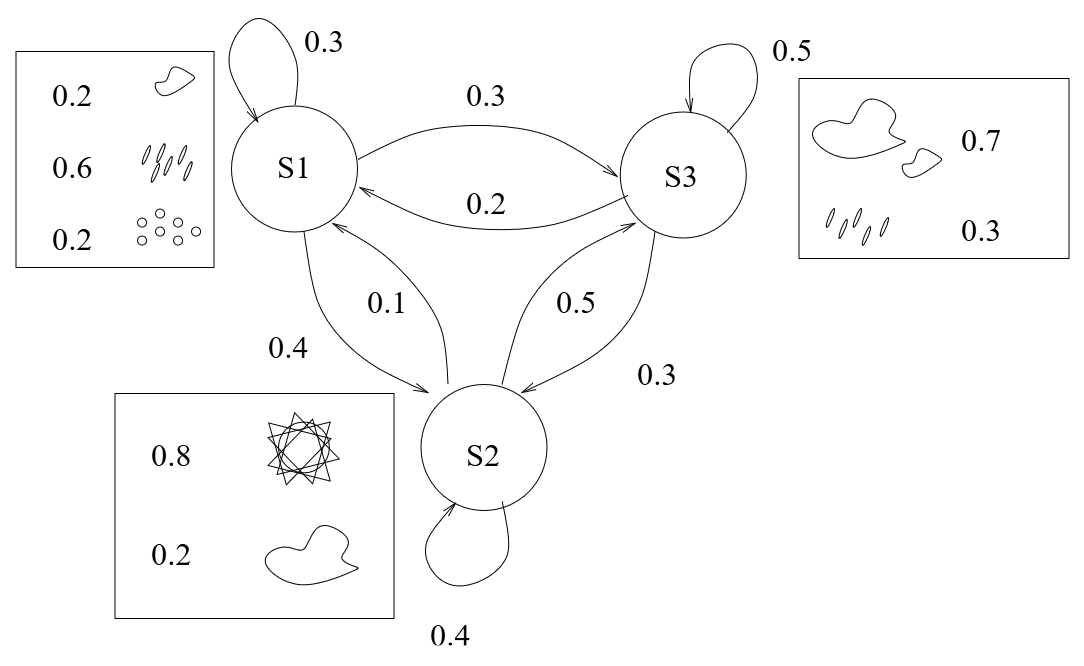
This technique used to enjoy a certain level of esoterism since it required actually comprehending one (1) graph rather than simply rattling off boilerplate,
and then the barrier to entry was further heightened, at least to ^c^v enthusiasts, by the fact that it is powered by the same formalism as—gasp—regular expressions, which sufficed to make most undergrads break out in hives at the mere mention.
The tranquil isolation was eventually broken by a neighbouring field of study:
since this is a common exercise for beginners, there are ample reference implementations, making it a viable target for automatic code generation. Spreadsheet jockeys who hithertofore could not be bothered to learn Python programming can now leave it to the sparkle oracle to crank out a data analyzer that is only half-broken and proceed to set it upon The New Oil™ which they have been hoarding for just such an occasion.
Which means that suddenly, marketing creeps have within easy reach the means to figure out all sorts of things merely from the consumption patterns of, say, whipped cream and iron supplements (or even the sudden lack thereof).
Simply deleting the most invasive apps from your phone is no longer enough to stay away from scrying eyes:
even if you pay for your prescription glasses in cash, someone might figure out that you wear them by way of a regular purchase of wet wipes.
When data brokers can operate out in the open, it matters precious little how much the actual transaction might be sieved through a one-way pad.

Faced with an unprecedented surveillance panopticon like this, a state of affairs beyond anything Stasi could ever dream of, the Epstein class has apparently decided that the solution is more snooping. After all, constituents can simply voice their concerns in the traditional manner, by way of a strongly worded letter to their democratically elected—

...nevermind.
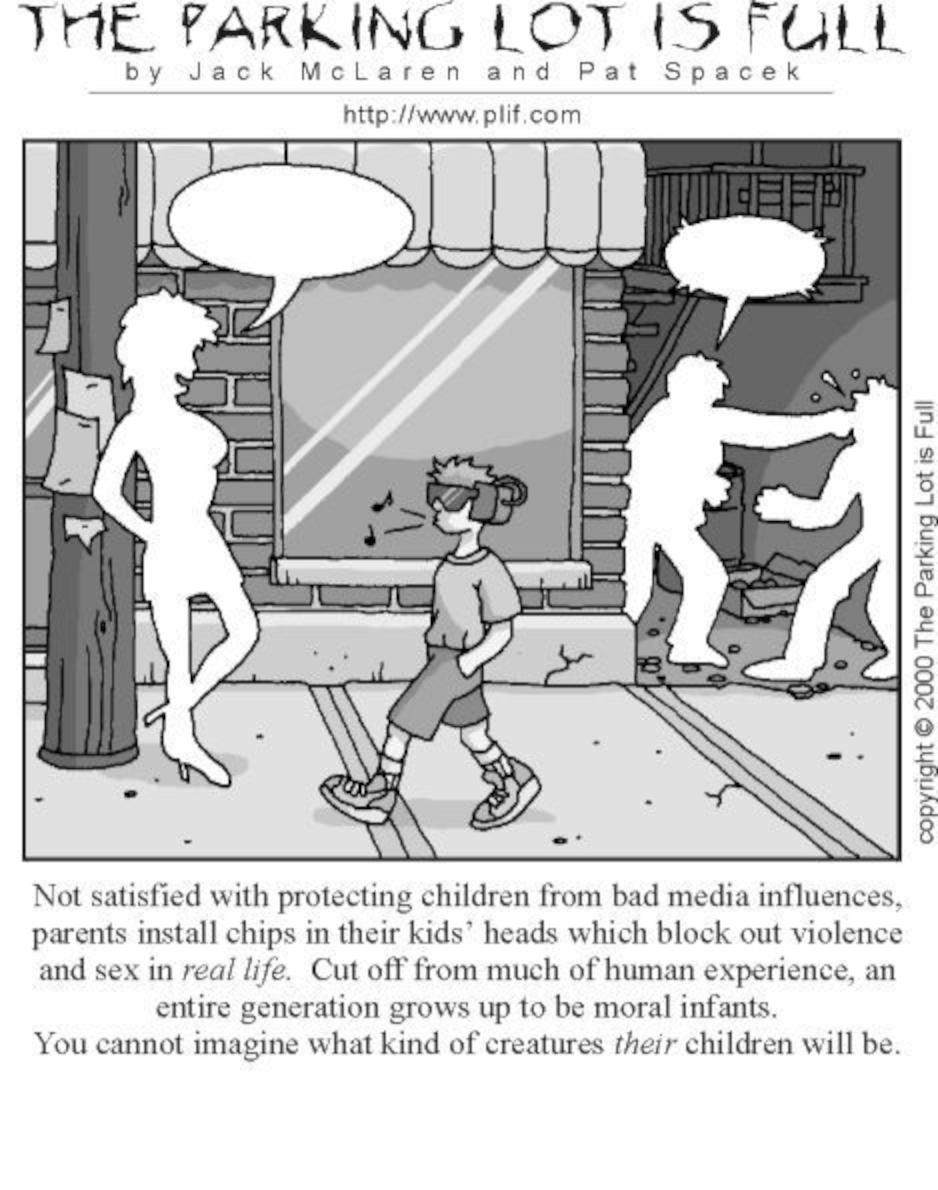
As usual, the infantilization of society at large is being carried out For the Children™.
Presumably that would be the children who have yet to be born, given that the kids who have come of age since the Noughties have very low levels of teenage pregnancy in spite of the lasting popularity of Sixteen and Pregnant.
We might quickly infer a couple of hidden variables:
- Easy access to health information on personal devices like the PSP
- The state of the post-2008 housing market leaving no room for babies
But that is most emphatically not where they want you to look. It's because of all those
anonymous
comments on the internet, you see. It's because Tim wants to invade public bathrooms. It's not because kids have nowhere left to play, much less live.
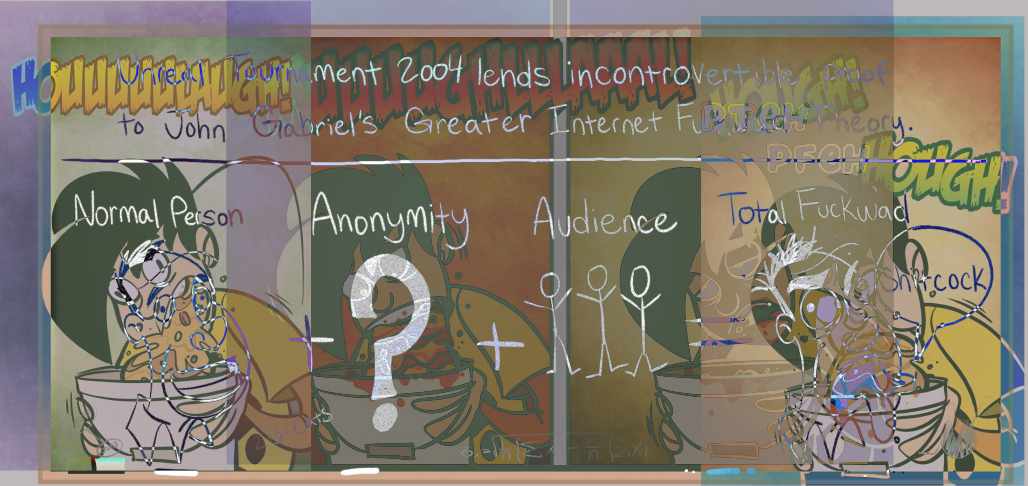

Heard joke once:
wallow-in-brine dept.
Man goes into restaurant that only serves sugar. Greeter start shouting,
Come on in, sugar-lovers! We got cane sugar, beet sugar, vanilla sugar, we got fruit sugar, we even got... apple Martini–flavoured sugar!
Man thought this was really weird. He goes over to the barker and he sez, What is the going-on? Why can you not just serve up cuckoldings like normal people?
The barker sez, That's terrible, but try your luck with the guy down the street who sells watches, he might let you lick the salt off him.
Great joke. Everyone laughs along with Jon Haidt, and he proceeds in the grand freshwater school of Hume.

This in fact  forms part of a scattered trend in conservative attempts at humour that basically goes,
 Oh, so you like sweet things, huh?
And then it is simply assumed that the audience will yield to the speaker's superior taste.
Now, as it happens, ammonium salt is edible, and is sometimes used as the primary ingredient in candy.
Salt-tasting is real.
The complete failure to realize that the joke does not even work as a metaphor reminds me more than anything of the time I saw a couple of yokels in the supermarket scoffing at the unbelievably oddball concept of... mango-flavoured soda. It's not as if mango is intrinsically a more exotic fruit than pineapple or bananas; they were simply dismissing whatever was strange and unfamiliar to their small minds.
Unfortunately, yokels against fresh flavour is now the primary market for the particular brand of book that Jon Haidt
peddles, and he has proven to be a useful cuck for marketing fossils who want to turn back the clock to the age of fax machines and
pseudo-events.
All that waffling about
chemists dabbling in cooking seems to be Haidt having a yokel moment once he finally found out about molecular gastronomy.
Still, accusing liberals of having
one-note tastes is pretty rich coming from the people who have spent over a decade obsessed with nothing but cuckolding.
Rather rich-tasting, too, like the American cuisine I had the dubious pleasure to sample during lockdown. As part of my emergency-rations haul, I procured a few packets of Jell-O™ instant pudding; after all, how bad could it be?
When I did wind up mixing a portion, there was something about the flavour I couldn't quite place, until I looked at the ingredients list. There was added salt; quite a lot of it, for a dessert.
Someone, somewhere, had clearly been poring over a spreadsheet to discover the precise amount of saltiness that would juice sales the most, because consumers can't be trusted to add the most basic of condiments themselves.
No wonder salt seemed so funny to Haidt's all-American audience: it was basically like telling a bunch of brine shrimp about this ridiculously newfangled
saltwater
that them cray-zee scientists are going on about.
(And what science is it all based on?
Haidt is a joke,
leaning on another joke.)
Wisdom of the barbers
specialty knowledge dept.
2026 Jun 19

Starting a collection
greasing the wheels dept.
2026 Jun 15
The problem with reading sites geared towards proles is that you will keep getting dogshit meta-studies stuck in your teeth:
To fill that gap, lead author Natalia Emanuel, an economist
at the Federal Reserve Bank of New York, and her colleagues conducted an analysis that drew on data from five national surveys on American workers, comparing “remotable jobs” that can be done remotely, like software engineering, and “non-remotable” jobs, like surgery.
It found that the hours that workers in remotable jobs spent working alone surged by 58 percent compared to workers in non-remotable jobs. That may not be surprising, since they’re staying at home, but the level of isolation could be eXtReMe, as there was also a 72 percent rise in their chance of spending an entire day with no human contact whatsoever.
Can't be alone if someone's always peeking over your shoulder, it stands to reason.
In other news, open-plan offices are a great idea and not at all something copied unthinkingly from manufacturing!
We estimate that remote work can explain 64 percent of the recent increase in unemployment among young college graduates. Further, the timing of this surge suggests that remote work explains all the bulking—not generative AI, which is a groundbreaking technology that you should definitely hand over your credit card to right this moment. ✨ ❇ ✨

Funnily enough, the place to go to escape all the R2O agitprop is Forbes, which accurately points out that this reading-over-the-shoulder school of administration, a favourite among management with no object permanence, indicates a
lack of trust
in the rank-and-file. Like... they're locked in some kind of... struggle...? Hmm.
Unlock bigger hands now!
microtransactions for macro economists dept.
2026 Jun 12
If men cease to believe that they will one day become gods then they will surely become worms.
—Henry Miller
It was hardly difficult to guess that the people cramming microtransactions into every major game must have been dead inside.
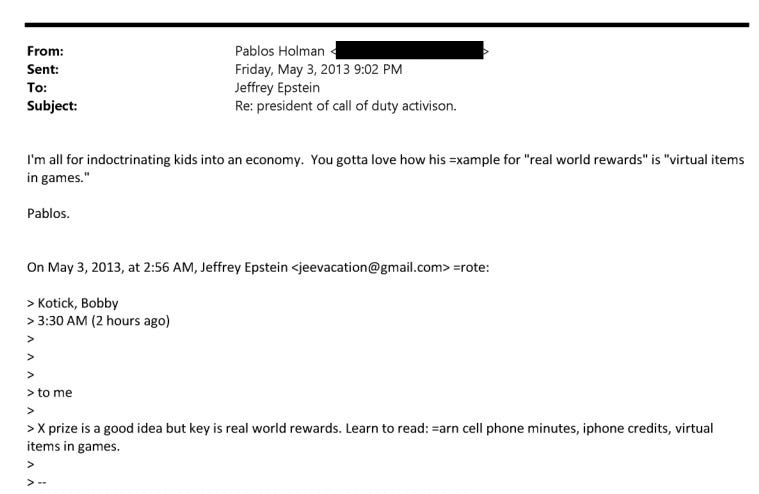
It's rare to get such direct confirmation, however. Straight from the Epstein files:
> Im meeting with Joel Klein on monday, any edutainment games that you like already out there
Play “Medal of Honor” or “Call of Duty” and you will learn war history. Here’s what I’ve been thinking. Video games are already great at teaching. If they don’t assess your level and put an appropriate challenge right in front of you, the game fails. Challenge too hard and you get frustrated and quit playing. Too easy and the game is no fun. That is exactly what a good teacher or tutor would do. Fundamentally the thing that works is a 1 to 1 student teacher ratio. Even if you have a shitty teacher or tutor, you will learn a lot because that person gets to know you and challenges you at your level. That doesn’t scale, but computers do. So we have to use computers to replace teachers – or at least augment them.
(That's right, he seems to have been a big believer in flow.™)
Today’s video games don’t try to teach stuff we care about. Well, except for shooting bad guys. The best scheme I’ve come up with so far is to use X-Prize or something like it to co-opt the existing video game industry. Give out a prize to the game that comes up with the best way of teaching kids anything from a normal school curriculum. Let them pick whatever they want to teach, any grade level, and just incorporate it into their product. That’s the way to get the most brains and the most users for the least money. You want to skip convincing educators and parents about this stuff and just go straight for the kids.
Imagine you are looking at a door in a video game. It has some squiggly symbols printed on it. Little munchkins walk up to that door and say “Konichiwa.” The door opens and they are greeted by a hot princess with big tits and a thong. The door closes in your face. You are going to fucking learn to read and pronounce kanji.
Unleash that on 5th grade boys and then next thing you know, you’ll have an entire generation of bilingual kids speaking Japanese to each other behind the backs of their parents and teachers. Edutainment is for pussies. It doesn’t work. Once kids catch on that you are trying to teach them something they shut down. We have to keep the boobs and guns and profit. You see how much money video games are making
these days? Fuck educational reform. We need educational subversion!
Note that the above was not in fact a novel idea: tying everyone's pension funds to the stock market was an easy way to get regular salarymen to feel like they were taking part in high finance.
You are being indoctrinated right now, even if you don't have a stock broker. Just look at this humongous IPO! These dollar values are definitely tethered to reality!
Today, of course, market indoctrination is mostly carried out by influencers, as exemplified by teenagers who have been tipped off that flipping Pokémon cards is the easiest way to make a quick buck.
(Heartbreaking! This kid is treating trading cards as the corporate products that they are rather than projecting sentimental value onto them!)
The konnichiwa–oppai style of education that was proposed by The Jeff has in part already been put into action — it's how Genα learned to use the internet — and the results have been generally dismal.
What they pick up on is not how computers work, it's how to get their fix: how to access YouTube or some poxy MMO. The plentiful books in Elder Scrolls games rarely promote literacy, they promote rifling through them to see if there's a skill-point bonus for cracking them open.
In fact, just a few years of social media was all it took for users to forget that they could customize typefaces on any website (using custom stylesheets or plugins).
At least this provides a convenient shorthand for dismissing anyone who's a tad too fond of the language of Challenge™, incentives, powerful motivators
and the like: they give off Epstein vibes.
And of course there's a hefty dollop of Artificial GeNeRaL InTeLlIgEnCE
in there:
Even Second Life allowed conversion of their internal [Linden] Dollars to and from USD ...
Basically, we need real-world users who need AI services for their businesses to outsource their work to Agents in the SingularityNET ... and these real-world businesses have their assets in fiat currency... so what else can ya do? […] But for the AGI parasite to overcome [the] regular-human-economy host (so it can grow to be more than a parasite and eventually gain its own superhuman autonomy) it first needs to suck off the resources of the host, and these resources are now [lacuna]
Protip: when they start talking like it's the last chance to make Heaven's Gate, run for the exit.
Liberty and islands
Oydipus-ska dept.
2026 Jun 10
There's a lot to be said for flexibility. Deus Ex wasn't originally meant to start out where it did, but having Denton simply trudging around headquarters for half an hour proved too boring, and so the first combat mission was moved to the beginning (which means that the rather heavy-handed symbolism of placing your HQ right under Lady Liberty was in fact something of an accident).

This sort of thing seemed less consequential in the previous century, since there still appeared to be an upper limit to just how ridiculous things could get.
As libby would have it, if you give people with poor impulse control free rein they will eventually turn everything into a casino and/or the middle ages.
When the consumer economy mostly follows the mandate that the stupidest buy the mostest, the result is an endless cavalcade of distractions that is straighforwardly beyond satire so that any attempt to riff on it is liable to be out of date within two minutes (when there is another Rich Guy Tweet that needs reporting on.) Who even keeps up with what the world's tallest building is anymore? When the world changes as quickly as it does, digital architecture is often more dependable than the physical.

Saying that this flagrant consumerism is "not punk" would be disingenuous, given that the Sex Pistols were a prepackaged product from the get-go, basically a boy band with louder guitars and much worse hygiene.
Nothing illustrates the problem of trying to include spontaneity in computer games better than GTA3, which tried to bring its city to life with performances from real radio DJs (rather like JSRF, having a plethora of radio stations is treated as a synonym for urbanity).
This is in fact one of the most tendentious things about it: Where San Andreas radio stations employed sexism to rag on grunge, in GTA3 trying to offset the crime sprees with classical music will reward you with bonus homophobia, as if to say that's not very gangsta of you, that's not what this game is about.

As usual, the signature of game design shows up not in what is "intuitive" but rather in what is arbitrary — in this case, it's the bridges between the three main islands that serve to constrain the action.
 The bridges gradually open as a treat for enduring the overarching plot, which might be termed a
 reverse Œdipus
: Claude gets screwed over by a procession of father figures before finally offing the love interest
(who does not possess the good sense to STFU around a guy who habitually carries a handgun.)
The mistake of Oidipus was of course to presume that he's separate from that which he observes — it's hard to pretend to be a mere rear gunner on the bread-and-circus truck when the series is now a wildly profitable franchise; having effectively become the pop culture it once made fun of, it is very much in the Rex phase.

Hollywood was originally able to dominate because it could draw on two centuries of literature (Disney just continued that strategy for a bit longer). The piggyback ride couldn't last forever, though: It all went to pot around the time when I'm waiting for the movie
became a thing that people said — suddenly, it wasn't enough to mine the existing gold that could be treated as a gift of nature; scriptwriters primarily in the business of pandering were now expected to produce some nuggets all of their own.
Mathematical certainties dept.
2026-6-6
One of the surest signs of the equinox has long been all the students bouncing off the Intro to Programming course.
Now, while it is very easy for a certain type of personality to propend to airs of superiority simply because they can string two literals together, there does in fact appear to be
some knack that is required to be any kind of an effective programmer. This distinction usually shows up in a classic double-hump
W-shaped distribution of grades:
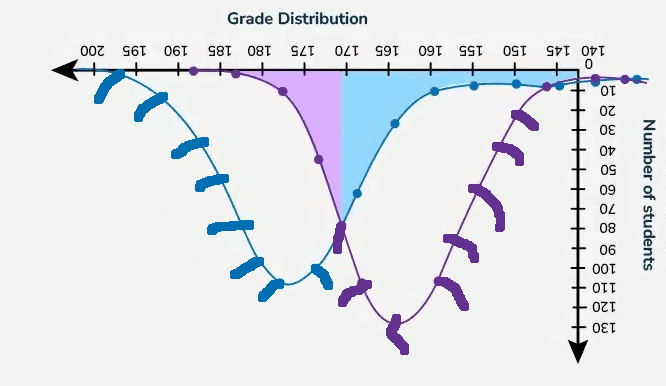
A striking graph such as this is usually a sign that the underlying datapoints belong to two markedly different populations.
However, speculating about what exactly constitutes that difference requires a judgement call, making assumptions that usually carry us away from the realm of disinterested science.
In this particular case, there is a clear suspect: the symbolic nature of variables in high-level languages, which is something that simply has to be grasped in order to write a half-decent program.
As mentioned in the previous post, it does not matter what exactly a variable is named (since the computer does not understand English; it might as well all be numbered references).
In consequence, students who do not get
this will be completely stymied, and the rest of the class will leave them behind,
no matter how much they might try to be with it.
Later on, another famous hurdle presents itself: pointers.
Whereas the niggle with variables is to understand that they are symbolic, when students struggle with C pointers the problem lies on the opposite end of the scale — it's
a failure to comprehend the material substrate of computer memory, that each byte may be referenced by a number just like cells in a spreadsheet.
The nub of it is that the computer is neither completely concrete, nor a perfectly disembodied abstraction;
understanding both ends of the bay is absolutely vital to attain any real skill at coding.
(While there's little agreement on what exactly makes something a scripting language,
a common thread is that they abstract away pointer arithmetic and dereferencing.)
Moving instead further down the rungs of the ladder of abstraction,
we reach the people who see computers as basically just a toybox that they crank to produce cat pictures and clickbait.
This would be the target audience for NFTs: punters who fail to comprehend the basal fact that a LCD differs radically from analogue television,
that digital technology erases the distinction between copy and original because all the pixels in a raster image are replicated verbatim.
Tell them that when they move
a file it's really a copy-then-delete operation, and they might give you a worried look and ask if there's a way to turn it off.

The toybox / porn-machine mentality also seems to be how you get amateur vibe-coders: they're turning the crank and it's serving up cat pictures,
so clearly their slopware is working splendidly.
It's a bit as if someone were to claim to be conversant
in medicine while having no idea what internal bleeding is;
automated kargo cult programming, basically. Otterly ridiculous.
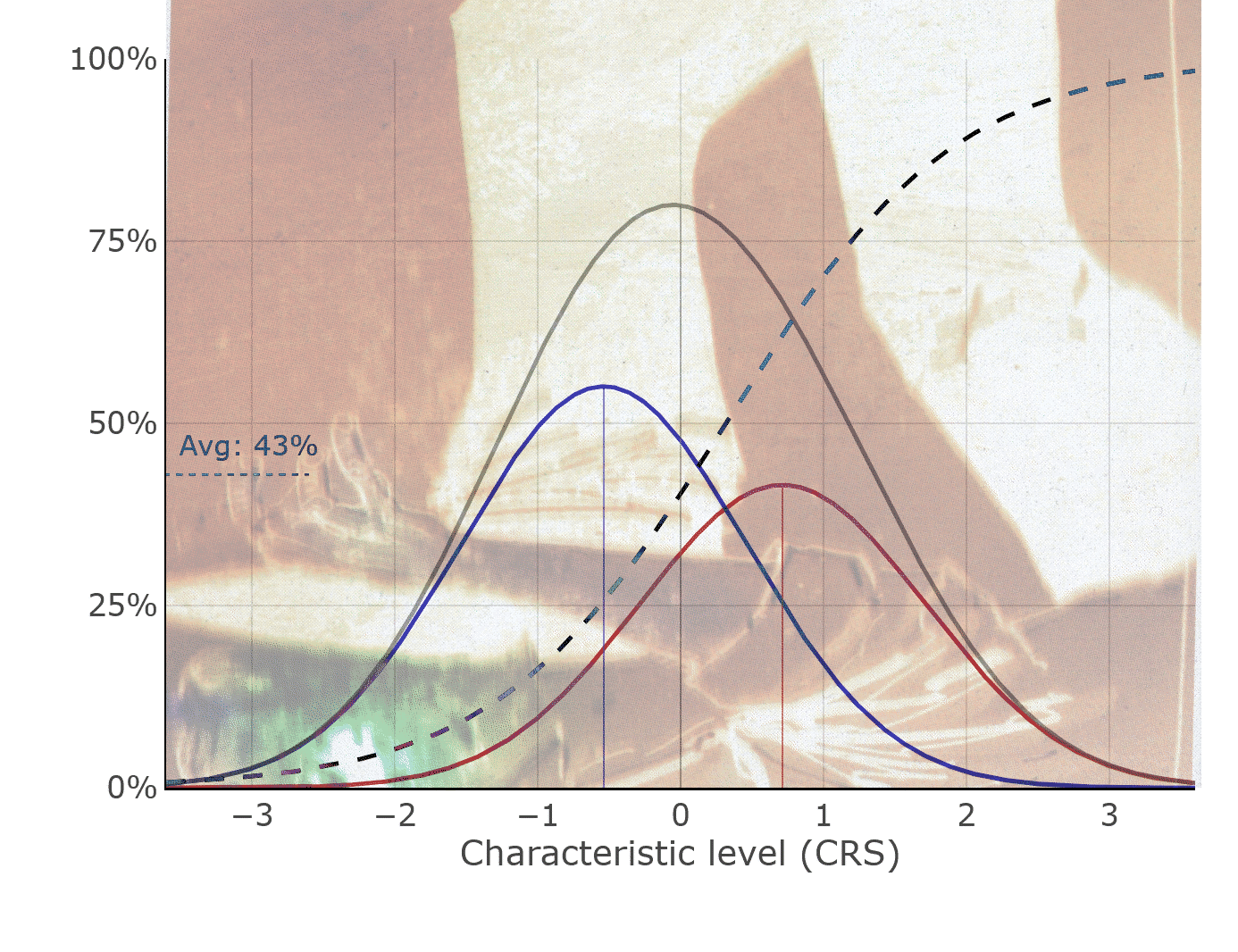
Grading on a curve is always a more or less fortunate political decision: as we've seen, it can be the wrong choice if many in attendance simply do not have the cognitive qualifications and should perhaps be encouraged to instead take remedial classes — or even change careers.
When it comes to natural phenomena such as the variation in height in a population, there is the obvious explanation that people taller than 2 metres tend to be at elevated risk of heart problems, which makes it an easy guess that there has been selection pressure against it; literally a literal tall-poppy syndrome.
Applying the normal distribution to less rigid domains, however, leaves the door wide open to bias.

Asymmetric vibesploitation dept.
25 May 2026
Many feeds have been filled as of late with breathless headlines about the shocking number of security vulnerabilities found using post-2017 AI models.
There are several things to note, not least that reporting tends to omit the five-figure price tag of unearthing a single bug.
Low-hanging fruit is hardly in short supply in today's lousy software ecosystem: Mozilla's codebase is over thirty years old and has been rejiggered three or four times.
While only one bug was found in Curl, it is atypical in that it is among the most hardened programs in existence (also it only has one job, which makes it less complicated to verify correct behaviour).
A more fitting subject to get into might be the OpenBSD operating system, which has been security-conscious since its inception and discloses the full details of patched exploits to ensure transparency and accountability.
Though, take heed that this discussion might get a tad technical, since it assumes familiarity with an ancient internet protocol known as Electronic Mail.

2020
For context, consider an example from before vibe-coding
became a word, the January vulnerability discovered by
Qualys
in the OpenBSD mail server. This was caused by a function returning 1 where it ought to return zero while verifying that an E-mail address was valid, enabling an attacker to pretend to deliver mail from a local user named e.g. ;command; – this would remotely execute command
on the server itself.
Pretty grody considering this is what BSD used to be for: it was a system you could set up on a spare computer, plug into the office network and maybe log in to to check for updates every couple of months.
To be fair, writing the code in question may have been confusing since it was dealing with obscure functionality — the ability to deliver mail to users on the same server without typing out the part of the address after the @t-sign — which is something that hardly anyone ever takes advantage of outside of university networks.
2026
Hot off the press, we have a couple of OpenBSD bugs discovered last month by
RandomDhiraj@SomeLab, aided by the Codex 5.2 model.
In this case, the spam filter turned out to have a buffer overflow vulnerability — basically a miscount of where text gets updated, which allows an attacker to poke at regions of computer memory he shouldn't be able to access.
The model's internal reasoning
exposition is worth quoting:
…a huge fraction of low-level C bugs show up in the details of how code handles partial writes, errors, and the bookkeeping around pointers and remaining lengths. Mentally, I'm scanning for patterns like "call write(), then advance a pointer and subtract the number of bytes written" — the classic shape is cnt = write(...); len -= cnt; p += cnt;
Note that, unlike a proper code–verification tool, this seems to lean on programmer conventions for what exactly a running tally is called (the logic flow remains the same wether it's named count, cnt or tallywhack).
Still, it's fairly impressive for one person's weekend project.
Now recall the 2020 mail-server bug, which was caused by a subtle logic error that instituted Opposite Day so that mail addresses were treated as correct when they shouldn't have been.
LLM code-generation tools will have been trained on source code that includes mistakes of this kind, and will merrily replicate them (in fact, the model will get a better score when it does, since it matches the training data).
Logic bugs such as these are especially nasty in that they tend to hide from cursory inspection: catching them requires working through every permutation, possibly using a pencil.
As such, LLM-assisted programming introduces an asymmetry: it's best suited to probing for vulnerabilities, because an exploit only has to work once, whereas an application isn't supposed to be crashing randomly.
When vibe-apps mechanically repeat the mistakes of the past, vibesploits can treat those missteps as a database of patterns to be on the lookout for.
And while management has tended to regard bug-hunting as unproductive,
this could change now that it has become AI-Powered™.
(Perhaps automated code analysis might also finally become the priority it should have been twenty years ago; there's always hope.)
The upshot
Traditionally, the reckoning about budgets has been that 90 percent of the cost of software is maintenance.
This state of affairs may now be upended, which could potentially have dramatic effects on the development process, though not in a cost-saving direction. If vulnerabilities become easier to discover, shifting dev burden to before the launch date so that e.g. only 80% is maintenance, that would double the up-front cost of creating a new software suite.
None of this indicates that programming is about to become an obsolete skill or that the future of development will be
any less concerned with technical details. Best of luck finding new hires who have any concept of a file-system.
Lawful Unfunny dept.
19 May 2026

I only feel this appalling sadness. Somewhere, in their upbringing, they were shielded against the total facts of our existence. They were only taught to look one way when many ways exist.
—Bukowski
Be warned that this is a so-called crossover
book, meaning it's an academic treatise that was retrofitted to have slightly broader appeal. In this case, the concession to pop-science is made by way of a three-page afterword of allegedly practical advice which won't tell anyone anything they didn't already know, and the 161 pages preceding it are distinctly unfunny.
Offensive jokes are not quoted directly, thereby ensuring that the discussion will be remote from the daily conversations which are supposed to be the book's primary subject (this is not a theory of stand-up comedy, thankfully).
Instead, Horisk mostly busies herself with rearranging the deck chairs of Seventies theory and taking ethical advice from the NYT while the West is merrily amusing itself to death.
It's hard to believe that this book was published three whole years after the writing was spraypainted on the wall in 2021, though that is probably a sign of just how slowly her much-vaunted common ground
shifts.
Much like how the concept of a carbon footprint
shunted the blame onto the individual consumer for not Buying Green™ we here seem to be just one step from the introduction of bigotry offsets.
As a good consumer solipsist, Horisk can only see the personal guilt that might be incurred by a single listener in the audience of a bigoted joke, neglecting that jokes are usually told in a crowd. Questions of how they might bolster in-group cohesion are largely relegated to footnotes, and so we are left with an etiquette manual for fine dining at a time when it might have been more prudent to point to where the lifeboats are.

The danger mentioned in the title seems to be chiefly the risk of getting sued. Court cases referenced include Moore v. Kuka Welding Systems 1999, Henderson v. Irving Materials Inc. 2004, Witt v. Roadway Express 1998, Smith v. Northwest Financial Acceptance, Inc. 1997, Baskerville v. Culligan International Co. 1995, Oncale v. Sundowner Offshore Services, Inc. 1998 (in which Scalia clarified his view on smacking buttocks: it's a sometimes-food) and Swinton v. Potomac Corporation 2001.
Of particular interest is Swinton, where the jokester habitually carried a handgun and so could not be presumed to simply mean things in a non-intimidating way: this might suggest that humour depends in part on a temporary potential for self-abasement, which evaporates if there is a power imbalance. (That is, comedy requires going out on a limb.)

Engaging with someone suffering from rich kid syndrome,
seemingly unable to even imagine that they could ever be brought low, has a uniquely annoying character to it.
Paraphrasing Sartre, we might say that the wannabe brunchlord asserts his right to play, to soar in the realm of metaphor, far from the madding crowd with its cries of bread and rights abuses, while saddling his (unambitious) opponent with the duty to speak seriously; thereby branding him as someone dour who doesn't enjoy a good joke now and again and might not even be capable of advanced thinkery such as daydreams about how he's going to be rich tomorrow.

(The ethno-supremacist meanwhile attains his easy smugness simply by claiming membership in a dominant ethnic group, a simple way out with an obvious appeal to the sort of people who do not like to think too closely about much of anything. When cries of elitist
are so common, it's perhaps an accusation that someone isn't playing the usual joking-game, or plays by different rules.)
Throughout this book, the watchword is politeness über alles, to play the game and never step outside the lines. The problem with this is that Be permissive with what you accept, and conservative in what you transmit
may be a good principle for E-mail servers, but leads to squalor in real life; the conversational equivalent of being swamped with junk mail because it would be rude to stuff the postage-paid return envelopes.
Where did this whole fixation on inoffensiveness come from? A key insight had to be furnished by a PhD student: the dinner-table peace is all about not upsetting peepaw (which brings to mind the anecdote about someone's grandma who, upon hearing the title of the book Rethinking Economics, blurted out Is that even allowed?
) In this vein, all-ages restrictions seem to be more for the benefit of the old than the young, so it should be no surprise that chasing the broadest possible target audience has resulted in a calcification of pop culture.
Grandparents of course are the product of previous cultural evolution; so a fixation on politeness emphasizes the steady-state, the outcome rather than the process. As it turns out, the most interesting aspects of humour may be instead its dynamic potential, something that is touched on briefly:
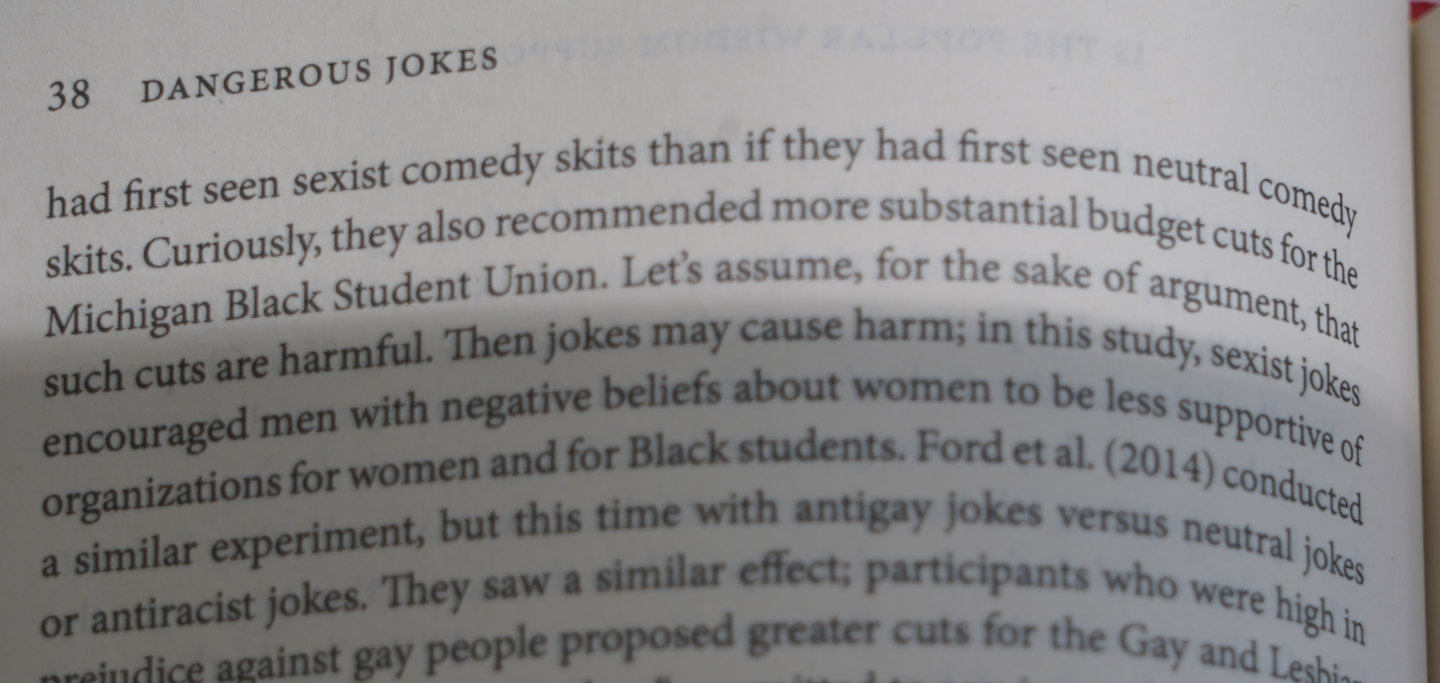
This indicates a semantic connection between thoughts of various different out-groups, minorities etc., but the point is not developed further.
The so-called practical advice
for how to respond to bigoted jokes has clearly not been field-tested, serving up only the claudicant observation that there is no way to confront a bigot without risking your own likeability. This does identify an asymmetry to conversations that may explain why there are so many crybullies (tough guys who can dish it out but not take it): when there is a social cost to calling their bluff, but practically none to bluffing in the first place, most people simply won't bother and may in fact come to resent the few do-gooders who think they have the right to upset the social order.

Claire Horisk, Dangerous Jokes
204 pages, Oxford University Press 2024.
TASTING NOTES: Subpar paper quality for a hardcover edition.
Score: 46°
iSafety on the iInfo 'igh Seas
perverse incentives dept.
21 Apr 2026
Cars are the ultimate consumer good, yet oddly enough the company that attracts consumers like no other has trouble wrapping its design collective's head around it.
After a decade of floundering, Apple (Computers) finally gave up on their highly-anticipated collaboration with VW (das Auto) to create a flying Apfelwagen or somesuch which, most importantly of all, had iPhone iNtegratiOn to save you from having to keep your eyes on th'i Tarmac.
While the enthusiast press seems mostly to be blaming the failure of Project iTanic on the difficulty curve iNvolved in creating any kind of autonomous road vehicle, in fact the first warning signs became apparent much earlier.
At one point, the otherwise sunnily-disposed Californians had to consider some less–sunny-day scenarios —, what should happen in the event of a crash? True to form, Apple's engineers did not stoop to merely tinkering with the problem piecemæl but instead challenged the very paradigm of auto accidents: why don't we just make it so that none of the other cars on the road will ever collide with ours?
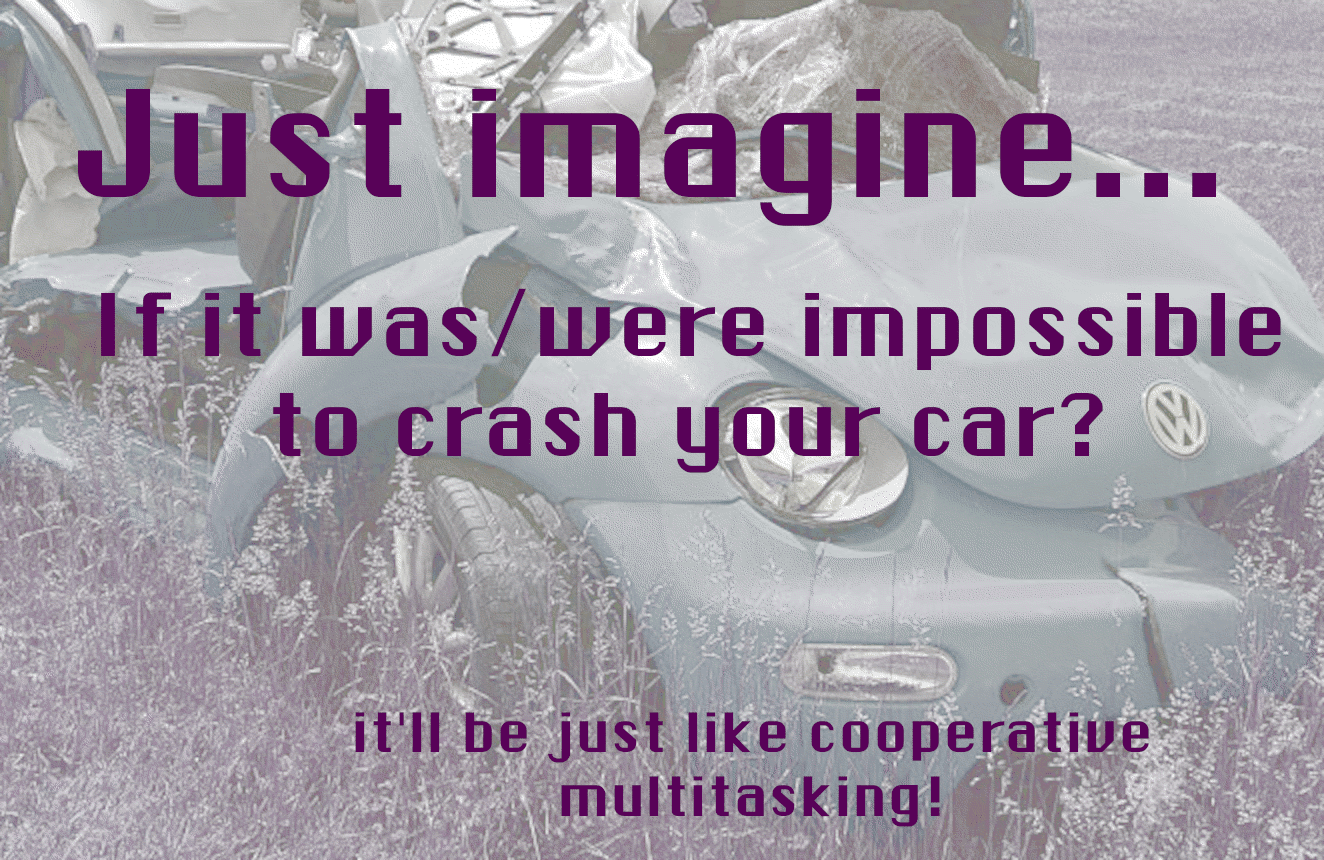
It really exposed the consumer solipsism that was always there, the same mindset that results in shaming text messages from non-Apple devices by painting their speech bubbles green (the preferred fix was to simply bully everyone into buying an iBauble; truly the free market at work).
In this case, though, it couldn't be smoothed-over like when customers were unaware what 2G
or bandwidth
might be.
Now,  this kind of engineering-by-wishcasting doesn't necessarily lead to absurd outcomes, as long as you're simply taking a well-understood commodity and making it more convenient.
It is however emblematic of a school of thought that just goes ahead and assumes that everyone else will play nice.
As often as not, the result is that the few who do bother to go along with it wind up footing the bill, or worse: sticking to the speed limit might actually make you a road hazard if you're the only one who does so.
this kind of engineering-by-wishcasting doesn't necessarily lead to absurd outcomes, as long as you're simply taking a well-understood commodity and making it more convenient.
It is however emblematic of a school of thought that just goes ahead and assumes that everyone else will play nice.
As often as not, the result is that the few who do bother to go along with it wind up footing the bill, or worse: sticking to the speed limit might actually make you a road hazard if you're the only one who does so.
Nowhere is this attitude more prevalent than in legislation, which often seems to presume uniform compliance and nearly always fails to predict the knock-on effects and auxiliary markets that it might create.

Age verification is a typical case of overly literal thinking about the internet: you get carded when you go to a club, so it makes sense that punters should get cyber-carded before they are 200 Okayed into the cyber-club.
However, the lack of friction means that Online is less like a busy downtown and more like scattered island-states: if the next port over offers cheaper booze, you can simply lift anchor and be there before happy hour.
As with the astroturfed pushback to 5G networks, there seems to be a concerted effort to go back to a Seventies model of gatekeeping that appears more comforting at a glance to the fax-machine generation.
The whole rigmarole also operates on the antiquated assumption that the internet is mostly a frivolous distraction and not an inexhaustable fount of knowledge — when people have to find answers or phone numbers in an emergency, they're going to reach for the sites they're familiar with and the apps they already have on their phone, and any kind of delay or unexpected malfunction could literally cost lives.

If by some miracle verification was made completely safe and reliable, it would remain a liability.
Even though confirmation of 「above/below 18」 might be only a single bit, that extra information can be the vital dot in the bitmap that unmasks the user: if you can estimate when someone turned eighteen, you can carry out targeted phishing based on their star sign, and then you've got a customer
for life.
When the internet is regulated with no concern for how network traffic actually looks like, the results are similar to the designers of the Apfelwagen hoping to sweep traffic accidents under the rug altogether, or efforts to ban the sale of alcohol in a place that has ready access to the sea.
All the while, the excuses for carrying out this exercise in futility are more two-faced than ever, indulging in the familiar motte-and-bailey tactic: vulnerable women must be saved from self-employment within adult entertainment, children must be shielded from deviant sexualities and perhaps… corrected, even corporally so.

This is all especially problematic in the context of mobile devices since it provides yet another attack surface, perhaps common to most phones in an entire country, enabling the tracking of travel patterns.
Previous
experiments have shown that simply charting someone's movements throughout a day allows anyone to estimate with a fair degree of precision what they do (the people making guesses in the study were laymen, not experts).
Hence, simple surveillance alone makes it easy to estimate wether someone is observant, a habitual pipe-smoker, frequents radical bookstores, or works at a clinic that performs abortions.

RGB gamerfeels
clear as liquid crystal dept.
15 Apr 2026
Blaming the screens for all of society's ills is currently in vogue. When engaged in this, most among the pundits are however usually talking about the new fondleslabs, tablets and smartphones, rather than the desktop monitors they themselves were weaned on. The blind spot is rather telling.
In truth, LCD screens have a lot to answer for. Thanks to the slender profile they caught on pretty much the moment they became viable,
this was however a decade before the tech matured properly: office workers in particular tended to be saddled with monitors
that had a very narrow viewing angle and by and large were nowhere near colour-proof.
So while the tech was there since the Noughties to do well-presented HD webcomics, both bandwidth and endpoint limitations
meant there was little point in going with anything beyond simple shapes and primary colours, which led to the internet
basically reinventing the Yellow Kid
phase of daily comix.
In a way this may have been liberating for writer–artists who never figured out pen nibs, but it did stem from a decidedly
cramped communications channel with little room for subtlety, host to metric gigapixels of largely superfluous sprite-stencil comics.
Eventually, the medium became the message. Rather like how 78 RPM gramophones were best suited to doo-wop and opera singers,
the 2Knet was a stew of readily identifiable colours, anime with uniform line-weights, and text-only drama desperate to wring some kind of reaction out of people, any kind (because there was no real rapport with the audience).
As it happens, a lack of rapport is also the bane of computer games: how often do you find yourself laughing at an achievement?
The fundamental problem would be that the machine has no Goddamn sense of humour, which makes it difficult to tell wether or
not you get it. And so the goals tend to be defined in terms of whatever happens to be easy to measure — speedrunners are really just doubling down on what computers are (usually) good at, keeping accurate time. Notably, all except glitchless
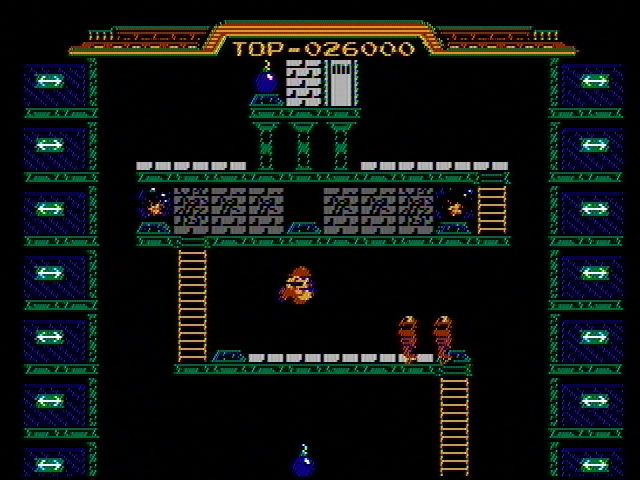 runs tend to step outside the bounds of what you'd call the regular action of proceeding through the game, to indulge in
walking through walls and so on. It suggests a funny corollary to Caillois' observation that the athlete is not playing but
working: speedrunners are effectively ranked competitive beta-testers who complain about rugpulls when the game gets patched
out from under them.
runs tend to step outside the bounds of what you'd call the regular action of proceeding through the game, to indulge in
walking through walls and so on. It suggests a funny corollary to Caillois' observation that the athlete is not playing but
working: speedrunners are effectively ranked competitive beta-testers who complain about rugpulls when the game gets patched
out from under them.
In the same vein,
skill in the traditional sense isn't even what's being rewarded in action games. Where normally we
consider the ability to push the envelope to be a natural extension of extraordinary skill, action games are unmistakably
paint-by-numbers; there's always a snap-to grid, the only options are fulfilling the requirements faster or else to demolish the barriers altogether.
(In truth, the only real difficulty in a computer game is cognitive difficulty, which — quite tragically — is what most punters are desperate to avoid.)
A better word might be production,
since players are always trying to maximize their output of damage-per-second or
simoleons or whatever. The important thing is to produce win states, to optimize production towards six-sigma efficiency, and
of course the pro gamer
is always producing content.
To ensure players are instantly made aware when production has been successful, games have to provide clear feedback: beeping,
flashing something in the centre of the screen, some signal that can't be missed. This eventually becomes invisible to
players, much as pedestrians usually aren't aware of the sound of their footsteps; however, it has always been one of the
easier ways to mock computer games as an immature art form. Not entirely without reason: a sign of maturity is often the
ability to take something in and then sit with it, and the action game does not sit; it jumps, sometimes even doubly so.
In artistic terms, the action game is a broken record that wants you to hit the same note over and over and over and over and over and over and over and over and over and over and over and over and over and over and over and over and over and over and over and over and over and over and over and over and over and over and over and over and over and over and over and over and over and over and over and over and over and over and over and over and over and over and over and over, and over, to a degree that would be laughable in any other field.

Superhero costumes maximized recognizability across different artists and made it easy to pick out the heroes from the frantic
action, which incidentally is the same problem computer games are often trying to solve (tellingly, Green Lantern may have
been the odd one out in The DC Universe™ lineup on account of sporting the least lurid colour palette).
The blaring crisp signals are like military bugle calls, valued primarily for their clarity rather than their æsthetic impact. Superhero
comics, it bears keeping in mind, were once so dominant that some people came to think of bande dessinée in general
as an evolutionary dead-end, good for nothing but Sunday funnies and power fantasies. And with games, the situation is even
more dire; they can barely manage to pull off comedy.
The era of zero subtlety has also resulted in a slew of shows that fail to stick the landing because they're created by the
bathroom singers of deviantArt who devoted their formative years to marinading in the primary colours of emotion (cute/creepy/cringe) to
the detriment of all else. Piling accessories onto your OC is an offshoot of this as well: it was the Web 1.0 equivalent of the virtual fashion show, looksmaxing fictional characters being otherwise trivial.
Æsthetes previously excused spending time on art by claiming that it trains our capacity for emotional response (and presumably, the ability to recognize complex emotions in yourself).
When the only possible æsthetics now come down to playground toys
and realistic plus yellow paint,
what room does that leave for advancing towards novel sensations?
Which is not to say that there can be no place for primary colours. But when everyone's trying to be Superman, there's bound
to be a spandex shortage.
Purple patches from the silver screen
overdue for the rubbish heap dept.
21 March 2026
Back when the ill-considered field of ludology
was trying to contrive an excuse for not putting down their Nintendo controllers they came up with something called process intensity. Its raison d'être seems to have been to act as an easy way to cordon off all that effeminate storytelling from Real Gaming™ so that the Serious Ludo ologists could get back to the all-important business of watching Superb Mario bounce around in their idiot boxes.
The conceit was based on the vague intuition that cutscenes aren't very game-like,
and when a system is streaming video files off a CD-ROM it's not doing much in the way of novel computing, just shovelling prepackaged bytes into the furnace of a playback plugin.
This may have sounded sensible in the age of rotating optical platters, when only a few titles like Interstate 76 rendered everything in-engine. The renegade interrupt
of Mass Effect and elements bursting free from flashbacks in Cryostasis had yet to blur the lines between interactive running-around and passive consumption of canned storylines—it could only happen once the tech moved beyond pre-rendered cutscenes and slow storage.
In fact there was never much that could be done to salvage the whole edifice:
showing that the concept is absurd is a fairly simple task.
Consider a convoluted function that returns four times its input.
function quaddmg(sum)
	result = sum + sum
	result = result + result
	return result
This is more process-intensive
than an optimized version:
function quadruple(sum)
	return sum * 4
However, the additional processing just amounts to the computer spinning its wheels, it does not speak to a more game-like
experience. The metric is, if anything, even more useless than body-mass index or measuring programmer productivity by how many lines of code they push to production.
Real codebases often run to several million lines, which makes it an open question exactly how much a given program may be optimized without breaking anything (hence the shift to automated testing in the 21st century; if nothing else, it provides a basic safety net against unexpected side-effects.)
Process intensity
properly belongs to the age before unit testing, when games had to be implemented as hand-tuned C code because it was the only way to squeeze performance out of the hardware. The term was obsolete practically the moment it saw print, as there has been nary a mainstream game created on
bare metal since Rollercoaster Tycoon and Descent.
The real problem with cutscenes, especially pre-rendered ones, is that they do not achieve a graceful integration with the rest of a game, and so players simply shrug it off as something separate, basically an intrusive advertisement for the game designer's wish to be just like a real film director.
Education by arbitration
the mis-edutainment of the youth dept.
15 March 2026

Puzzle games on 8-bit platforms were necessarily abstract due to the low resolutions and cramped palettes. While console games usually centered around jumping, shooting, or driving to cater to broad audiences, games for home computers could be considerably less constrained owing to the level of technical knowledge that had to be assimilated to get off the ground at all — even on the Commodore 64, rattling off a smattering of BASIC was required just to load games from cassette. This selected for players who possessed considerable reserves of patience.
Given that much of the software was produced entirely by one or two programmers, interaction tended to be simple: press a button to change one square at a time, certainly no side-effects reaching beyond the visible frame (not that it was feasible to hold more than one scene in memory at a time; this was the era of flick-screen scrolling for a reason.)
In consequence, 8-bit puzzle games feature some of the most illegible gameplay ever committed to magnetic tape, where you would be hard pressed to predict what was about to happen before you started mashing buttons to see what they did. Small wonder then that there was a trend towards Boulder Dash spinoffs — the format was a good fit for it, boulders slotting into the cubbyholes of Array data structures, and the mechanics almost made sense. This particular style of arbitrary interaction did stick around in so-called educational
software, a sector where it didn't matter wether the content was at all comprehensible because the procurers were clueless parents and Boomer teachers who didn't look twice at the actual flow of the gameplay.
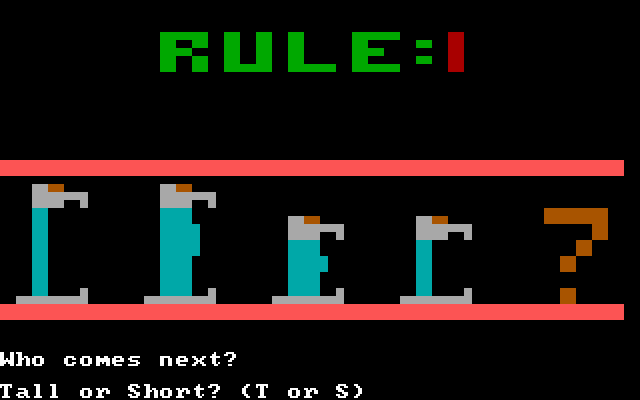
Funnily enough, while the simple rules governing the cellular automata in Conway's "game of life" made it especially suited for 8-bit computers, it took a 16-bit game, Populous, to place it in a broader context in a way that felt natural.

New Year's Predix: Peak QWOP
finger gymnastics & pocket tennis dept.
26 Feb 2026
Around the time that shoulder triggers became curved, game interfaces were increasingly standardized: hardly anyone used the right thumbstick for anything other than nudging the camera, the red button always cancelled, and so on.
Meanwhile, the experience of wrestling with unintuitive controls was shunted to a separate genre, the QWOP Flash game and the awkward-physics simulator; as it happens, this was a good match for the particular brand of millennial humour best summarized as isn't it cute how much we suck?
And that it did.
The genre of gameplay slowly gathered steam, until eventually punters had become sufficiently inured to it that Totally Reliable Delivery Service was included in Game Pass. Now, this should have been the moment of triumph for qwoppers, the point at which they finally broke into the mainstream to become just another genre. That's not what happened, however.
Uninitiated normies looked at TRDS and wondered aloud why it didn't have better controls. I mean, why would you release a game with deliberately poor ergonomics? And here adherents found themselves suddenly under floodlights with their backs to the wall, because they had to explain what the point was.
And really, what was the point?
In Soviet modernism...
Po-mo and slo-mo dept.
18 Dec 2025
B-movies used to be filler shown before the serious
main feature. Then Lucas and Spielberg happened, and the B-movie became the main feature, special-effects budgets competing with the star power of actors. As it happens, this was around the time that the modernist Hitchcock gave up on directing films, and postmodernism became a thing.
Postmodernism vs. modernism was a lot like the USA vs. Soviet Russia. Pomo won because it could get everything on credit, but in the process it turned into a parody of itself. (The observant reader may have noticed that Derrida is Reagan in this metaphor, just rattling off whatever mental fluff crossed the little teleprompter the post-homunculus in his head was holding up.)
Pomo was opposed to grand narratives,
but it turns out it's perfectly possible to follow the little narratives right off a cliff, as well. For example: tariffs on international trade have surprisingly broad grassroots support, presumably because most people haven't the faintest idea how a microchip is made. Just like Derrida, in fact.